Tech and business writing

Research, essays, and working notes from the practice: how AI actually changes the way organizations build, retrieve, and decide.

Posts, newest first

Four of these posts introduce a research paper or whitepaper. The papers themselves are listed further down.

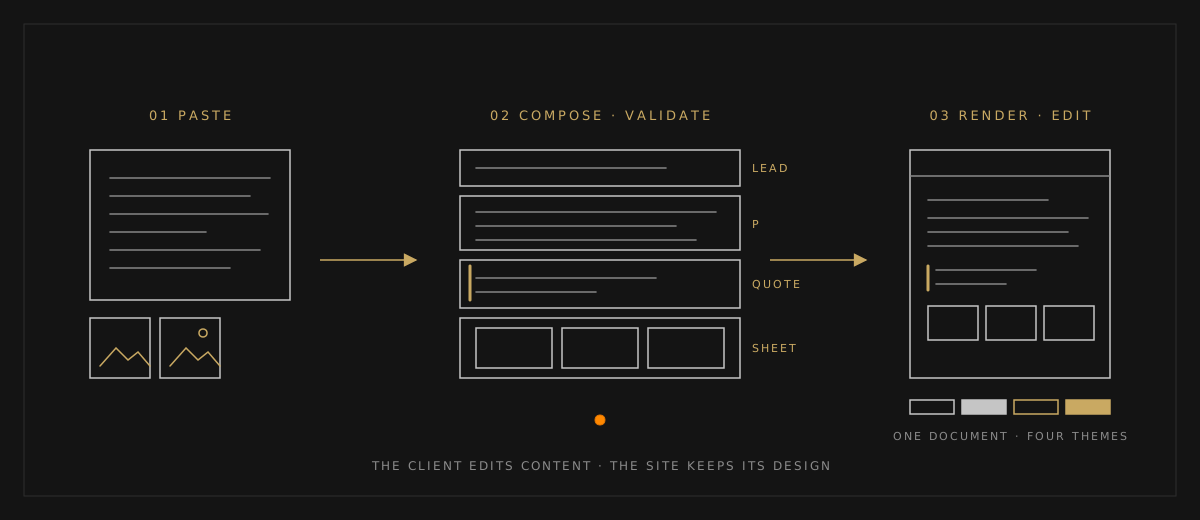
Diagram: pasted text and photos go into a composer, come out as a column of typed blocks, and are rendered by the site under four interchangeable themes

Paste the text, keep the design

CS Content Management is an installable, AI‑composed block CMS for client sites. The client pastes text and drops photos; the AI proposes the page as typed semantic blocks; code validates them; the site renders them under its own stylesheet. Wording and photos are edited in place on the live page, every save is a revision, and nothing in the interface offers a font or a column. The demo site is written with it, and a Theme menu swaps four designs on the same content.
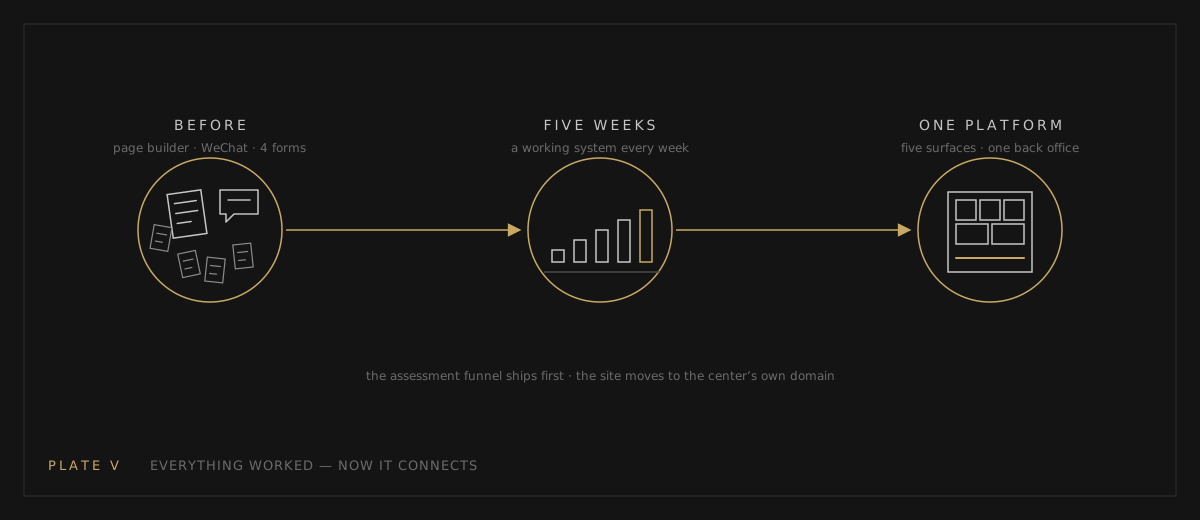
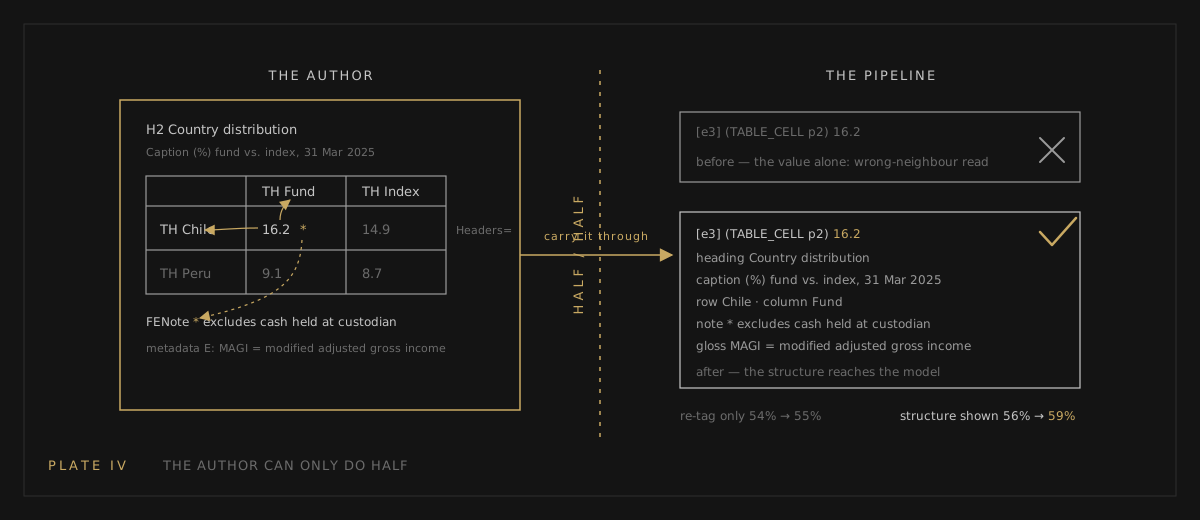
Diagram: a page builder, WeChat posts and four Google Forms become, over five weeks, one platform with five surfaces and a back office that the center owns

From a page builder and four Google Forms to a platform the center owns

The Asia-Pacific Youth Growth Center USA runs youth programs on two coasts and publishes mostly through WeChat. In five weeks it went from a one-page site on Gamma and hand-answered forms to a bilingual assessment funnel, an editorial website, a unified intake, verifiable certificates, and a back office where staff edit the live site with AI at their side. Before-and-after, the working model, every surface, and the design language.

Diagram: an author binds notes, headers and captions inside a tagged PDF; the pipeline must then write that structure beside each piece of evidence the model reads

The Author Can Only Do Half

Part 3 closes the cycle: the eight pilot PDFs were re-tagged by hand along the DTAA guidelines and re-assessed on the same frozen tasks. Re-tagging what was already tagged changes almost nothing; binding notes and pointing cells at their headers changes what the document can state — and the score only moves once the pipeline writes that structure beside the evidence the model reads. Egres (formerly EGR-S) goes from 42% to 59%; the chunk baseline has nothing to carry.

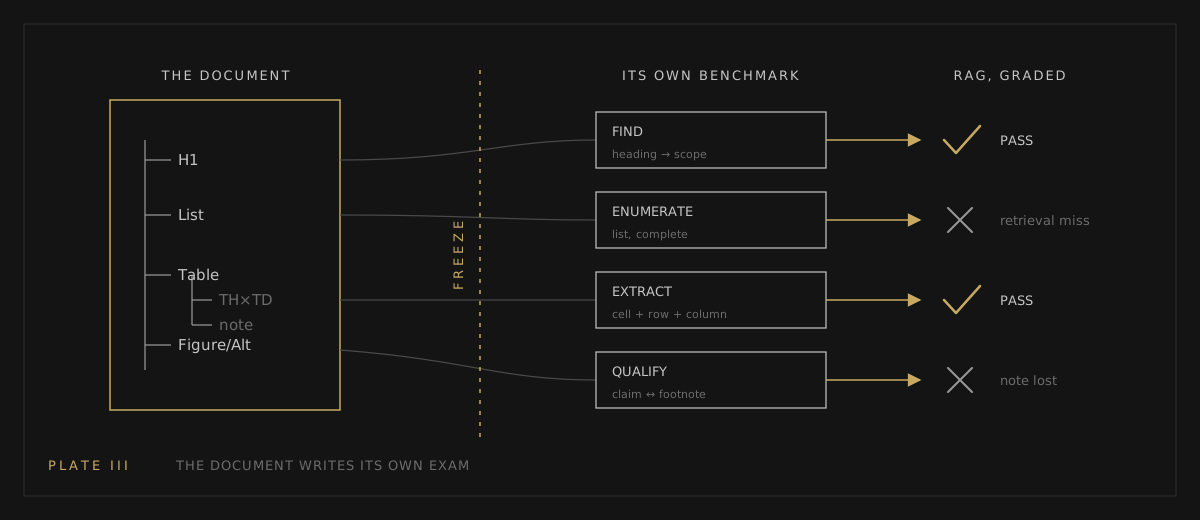
Diagram: a document's structure tree derives a frozen benchmark of tasks, which retrieval systems pass or fail

The Document Writes Its Own Exam

A tagged PDF already declares how it is organized. DTAA uses that declaration to enumerate every information task the document supports — before any question is written — then measures how reliably RAG systems complete them. On eight professionally tagged documents, the best system passes 42% of task phrasings.

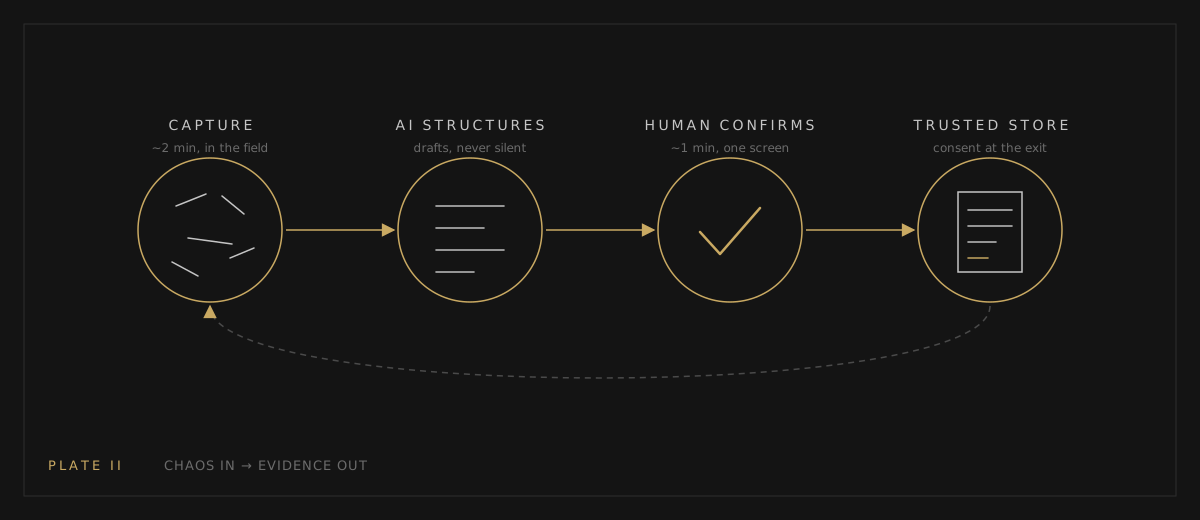
Diagram: the Evidence Core loop of capture, AI structuring, human confirmation and a trusted store

Nonprofits don’t have a data problem. They have a data-entry problem.

Community organizations do far more than they ever document; the proof is scattered across phones, chat threads, and sign-in sheets. Evidence Core accepts that chaos as input, structures it with AI, and lets humans confirm — so reports trace back to real evidence. A whitepaper for decision makers, in English and Chinese.

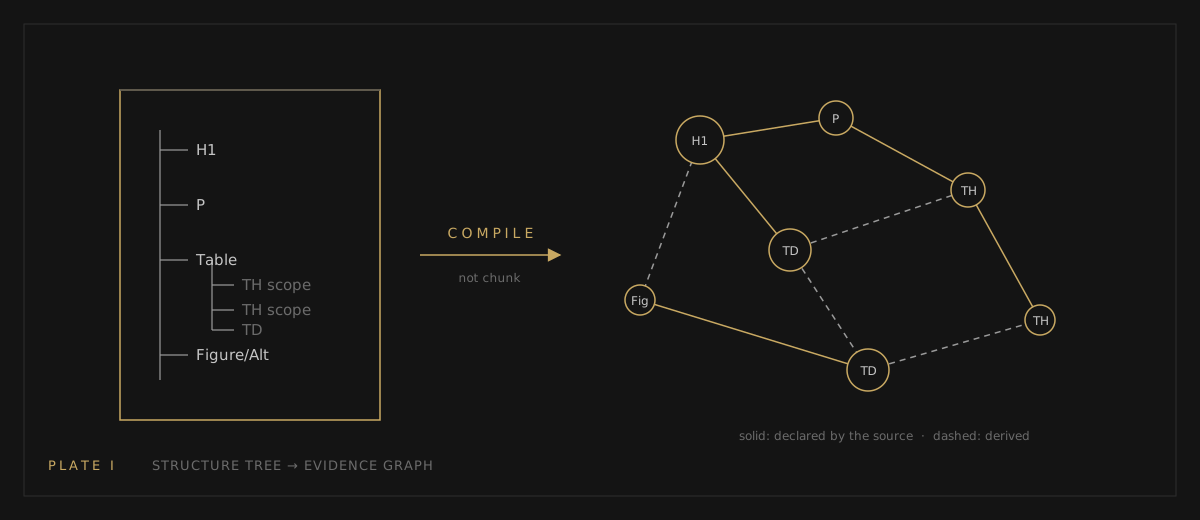
Diagram: a tagged document's structure tree compiled into an evidence graph with typed edges

Don’t Chunk the Document — Compile It

Tagged PDFs carry an authoritative account of their own structure. Evidence Graph Retrieval compiles it instead of chunking it — and on held-out questions reaches perfect evidence recall at 4× less context, with recall at corpus scale that chunking cannot buy at any budget.

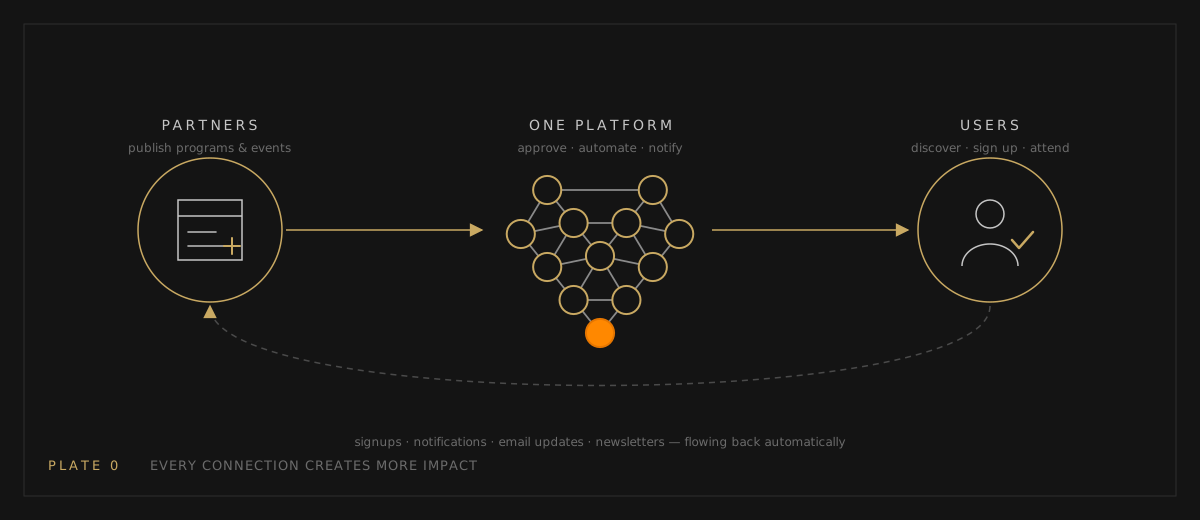
Diagram: partners and users connected through one Kindness Network platform, with signups, notifications and newsletters flowing back automatically

City of Irvine features Kindness Network

The City of Irvine now points residents to meetkindness.org — the platform Cyphia Solutions built for Kindness Network. Partner institutions publish their own programs and events, community members sign up and stay informed, staff approve and broadcast — while signups, notifications, email updates, and newsletters run themselves.

Get the next one

Cyphia Updates is an occasional note when we publish a paper or ship a case study. If something here touches your own work, tell us about it.